Linktree traffic by source: what a year of data shows
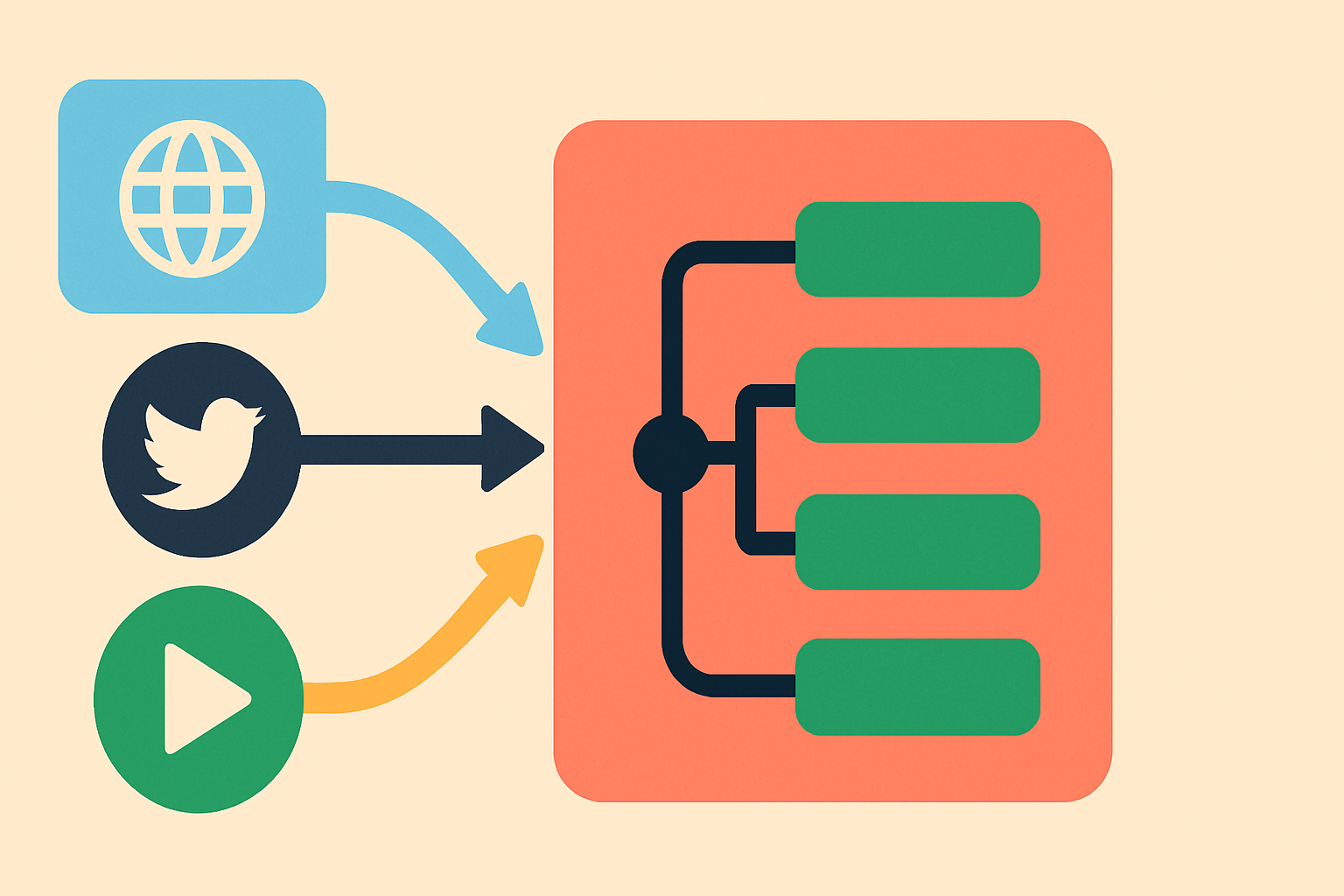
TL;DR: Google Search visitors click links on your bio page 95% of the time. Instagram and TikTok land around 83%. Facebook sits at roughly 41% — less than half. Volume and quality rarely come from the same platform, so your strategy needs to account for both.
Linktree traffic by source: the numbers creators actually need
Across 12 months of certified Linktree engagement data (May 2025 through April 2026), one pattern kept showing up: not all traffic to your link-in-bio page converts the same way. Instagram, TikTok, and Google Search visitors clicked through to external links at rates between 80% and 95%. Facebook visitors clicked through at roughly 41%. Same page. Same links. A gap of more than two to one.
That gap has real consequences for how you should think about platform effort. If your analytics show Facebook as a significant traffic source, you are working harder for each conversion than a creator running identical content on Instagram or TikTok. Knowing which sources send high-intent visitors, and which send browsers who bounce, changes where you put your energy.
Key takeaways- Google Search had the highest click-through rate of any source at ~95%, every single month of the year
- Instagram and TikTok both held around 83% click-through rate across all 12 months
- Facebook averaged roughly 41% but showed a steady climb from 30% in May 2025 to 58% by April 2026
- Instagram drove nearly 4x the view volume of TikTok and 7x that of Facebook over the same period
- Custom domains and indexable profile pages are the practical way to capture more Google Search traffic
What the click-through rate gap actually means
A visitor clicking through to one of your links from a link-in-bio page is the whole point of the page. Click-through rate (clicks divided by profile views) is the single most useful number for measuring whether a traffic source is worth chasing. Linktree's 12-month dataset, covering certified engagement data from May 2025 to April 2026, shows click-to-view rates across major referrer sources. The spread is wider than most creators expect.
Google Search leads at roughly 95%. Someone typing your name into a search engine already knows they want something from you. They found your profile page intentionally. They click. Instagram and TikTok follow at around 83%. Both platforms are high-intent by design: the bio link is the only outbound link in a post, so creators train their audiences to tap it for the good stuff. Facebook trails at about 41%, which has climbed from a low of 30% in May 2025. Still half the rate of Instagram and TikTok, but the upward trend is worth tracking.
One important caveat from the data: because some visitors click multiple links per visit, these figures are best used for comparing sources against each other rather than as absolute conversion benchmarks. The relative ranking is what matters for strategy.
Instagram is the volume engine, but intent is more spread out
Instagram drove approximately 11 billion views to Linktree pages over the 12-month period. That is roughly 4x the next-largest social source and about 7x Facebook's total volume. For creators with an established Instagram audience, the combination of high volume and 83% click-through rate makes it the most efficient platform in the dataset for driving link traffic.
TikTok matches Instagram on click-through rate at around 83% but delivers a fraction of the view volume. That volume gap will close over time, and TikTok's click-through behaviour suggests the audience it sends is just as action-oriented. For newer creators building on TikTok, the quality of each view is equivalent to Instagram even if the raw numbers are smaller.
The practical implication: if you are currently splitting your content creation time equally across Instagram, TikTok, and Facebook, you are almost certainly over-investing in Facebook from a link-traffic perspective. That is not a verdict on Facebook as a platform for community building or brand awareness. It is a specific statement about link-in-bio click behaviour based on a year of actual data.
Google Search is the stat most creators ignore
Volume from Google Search is a small fraction of what Instagram sends. But 95% of visitors who arrive via Google Search click a link. Every month. That is the highest intent of any measured source in the dataset.
The reason is straightforward. A search visitor looked you up on purpose. They typed your name or your brand into a search bar and chose your profile page from the results. That visit has a specific goal attached to it. Contrast that with a social media visit driven by a video post: the viewer was passively scrolling, saw something they liked, and tapped the bio link out of curiosity. Both visits have value. They have different intent levels.
Most link-in-bio tools handle Google Search traffic poorly. Linktree's standard profile pages use a subdomain (linktr.ee/yourname) with no custom domain option on free plans, which limits the SEO signal attached to your profile. If you have built any brand search volume at all, that traffic is landing on a generic subdomain rather than a page with your name in the domain. The difference in click-through rate does not change based on what tool you use, but the volume of Google Search traffic that finds your page does. A crawlable profile on a custom domain at yourname.com or yourbrand.com indexes faster, ranks better for brand searches, and captures more of that 95% click-through intent traffic.
MyLinks.page supports custom domains on all plans, including free. Your profile page is fully crawlable by search engines. If SEO-driven traffic is the highest-intent category in the dataset, building your link-in-bio on a platform that actually supports indexing is a straightforward move.
Switch from Linktree in 60 seconds
Paste your Linktree URL — we'll bring over your links, bio, and avatar. Free forever, no credit card.
Import my Linktree →
How to use this data to change your strategy
The data from Linktree's 12-month dataset points toward three concrete adjustments, none of which require changing what you create.
First, check where your profile traffic is actually coming from. Most link-in-bio tools show referrer source in their analytics. If you are not looking at this breakdown, you are making platform decisions without the most relevant input. Source-level click-through rate tells you which audiences are showing up to act versus showing up to browse.
Second, if you have any brand search presence, make sure your profile is findable. Add your name and core keywords to your bio page title and description. If your tool supports custom domains, use one. The Google Search click-through rate in this dataset is not going to help you if the search result for your name goes to a generic subdomain, a social profile, or nothing at all.
Third, watch the Facebook trend rather than writing it off. The climb from 30% to 58% click-through rate over the year suggests something is shifting in how Facebook users interact with bio links. That trend is worth monitoring. It may reflect changes in how Facebook surfaces bio-link posts, or it may reflect audience behaviour shifting as users become more accustomed to the format. Either way, 58% is starting to approach the Instagram and TikTok range.
What better analytics actually looks like
The Linktree data is useful because it covers a large certified dataset. The limitation is that it shows you aggregate behaviour across all Linktree creators, not your specific audience. A fashion creator's Facebook audience may behave very differently from a finance creator's. Your own source-level analytics are more actionable than industry averages.
Good link-in-bio analytics should show you, at minimum: traffic volume by referrer, click-through rate by referrer, which individual links got clicked and from which sources, and how those numbers change over time. UTM parameter support is the other piece: when you run a campaign and want to know whether the Instagram story drove more clicks than the feed post, UTM tracking gives you that breakdown without guessing.
Linktree's analytics are gated behind paid plans for the most useful views. That is a common pattern across the category. The standard argument for paying is that you need the data to make good decisions, which is true. The question is whether you should be paying a premium for analytics that your link-in-bio tool should be providing by default.
See the side-by-side
Paste any Linktree URL and see how that same profile would look on MyLinks.page.
Preview it →
The source tells you about intent before the click happens
The simplest way to use linktree traffic by source data is as a mental model for setting expectations. A visit from Google Search is worth more in click-through terms than a visit from Facebook, by a wide margin. A visit from Instagram or TikTok is worth roughly twice as much as a visit from Facebook. Volume from Instagram is enormous relative to everything else.
None of that is a reason to abandon a platform. It is a reason to set realistic performance expectations per platform and to stop optimising for raw traffic numbers when click-through intent varies so significantly by source. A thousand Google Search visitors will produce approximately 950 outbound clicks. A thousand Facebook visitors will produce approximately 410 clicks from the same page. That gap is not about your content or your page design. It is about where the visitor came from and what they wanted when they arrived.
Building your link-in-bio on a platform that makes the most of all three high-intent sources, with full SEO support, referrer analytics, and no paywalled data views, is the practical conclusion the dataset points toward. You cannot control where every visitor comes from. You can control whether your page is built to capture the ones who showed up ready to click.