Small business plan: the step-by-step guide for 2024
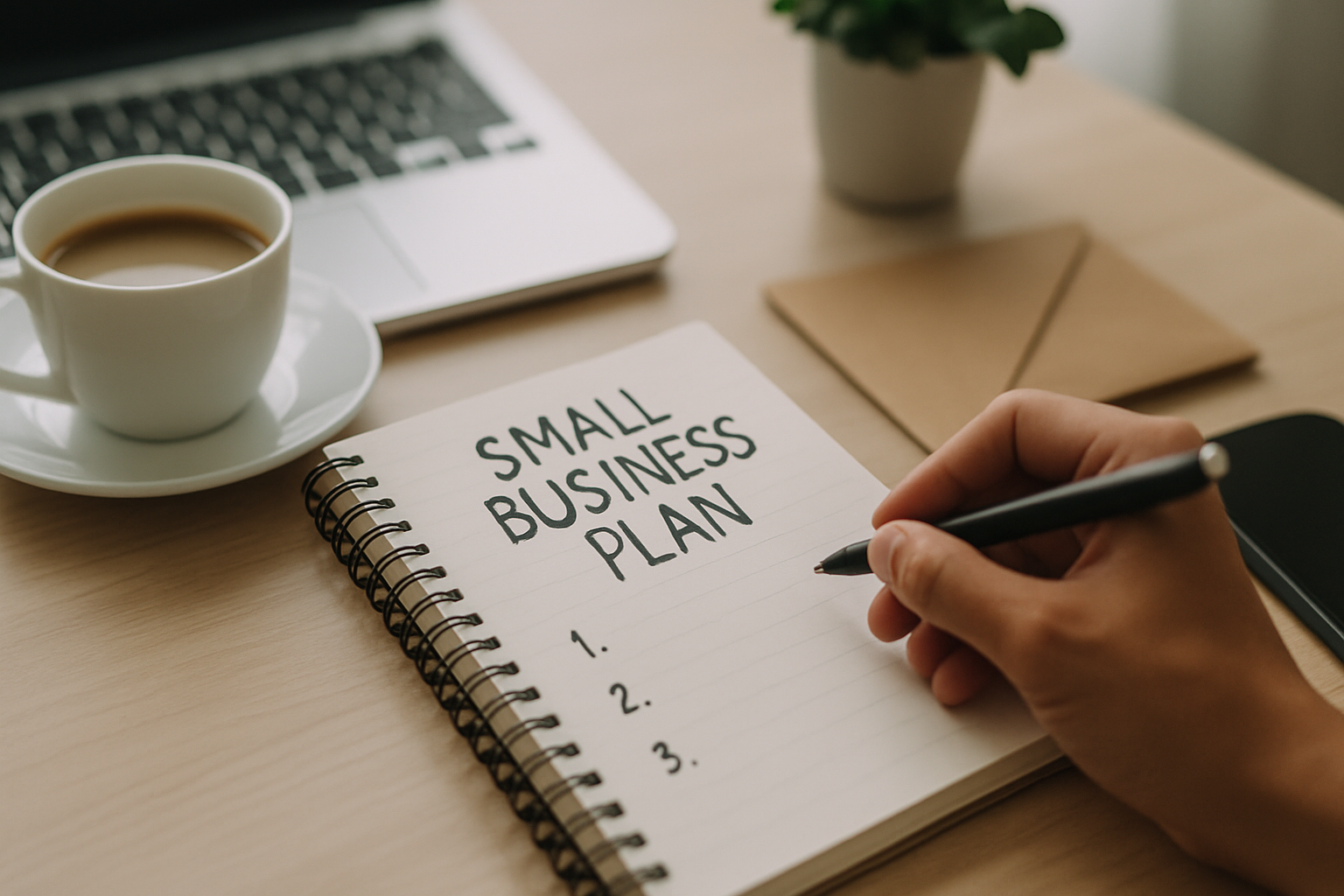
TL;DR: A small business plan gives investors and you a clear map: what you sell, who buys it, how you make money, and where you will be in three years. Most first-time founders over-engineer it. Start with six sections, keep it under 15 pages, and make sure your online presence (including your link-in-bio) matches what you wrote down.
What a small business plan actually needs to do
A small business plan has one job: convince someone (an investor, a bank, or your future self at 2am) that this business will make money. Everything else is decoration. Most templates available online try to pad this into a 40-page document full of MBA jargon. You don't need that. What you need are six clear sections, honest numbers, and enough specificity that someone who has never heard of your idea could execute the basics without calling you.
According to the Small Business Administration, businesses that write a formal plan are 16% more likely to achieve viability than those that don't. That's not because the document is magic. It's because the act of writing forces you to find the gaps in your thinking before the market finds them for you.
This guide walks through each section of a small business plan, tells you exactly what to put in each one, and explains how your digital presence (including your link-in-bio page) connects to the plan you write on paper.
The six sections every small business plan needs
Keep the plan to these six sections. You can add more later. Starting with less forces clarity, and clarity is what wins over investors.
Executive summary
Write this last. It belongs first, but you can't summarize something you haven't finished. Two paragraphs: what the business does, who the customer is, and one specific claim about the market opportunity. A single sentence on what you're asking for (funding, a partner, a supplier deal) closes it out.
Avoid phrases like "the next big thing" or "disrupting the industry." Investors read a hundred plans a month. Every one of those plans disrupts something. Yours should state a specific problem, a specific customer, and a specific number.
Company description
This is where you describe what you actually sell and how your business is structured. Include your legal registration (LLC, sole proprietor, S-corp), your physical location if relevant, and the founding date. If you are a solo creator selling digital products, say so plainly. If you run a pop-up bakery with two employees, say that. Precision here builds trust in every section that follows.
One thing most templates skip: your online address. Where does someone go to find you? A website URL or a link-in-bio page is now as essential to a company description as a physical address was 20 years ago. Write it down.
Market analysis
This section answers: who wants what I'm selling, how many of them exist, and who else is already selling it? You don't need a research firm. You need three things: a rough market size estimate with a credible source, a profile of your target customer (age, income, platform, buying behavior), and a short list of direct competitors with one honest sentence about each.
A citation capsule for this section: The U.S. Census Bureau's County Business Patterns data and the BLS Consumer Expenditure Survey are both free and frequently updated. For digital businesses, Statista's free tier and Google Trends give directional data. Citing actual sources tells investors you checked the numbers rather than invented them.
Products and services
Describe what you sell in concrete terms. Not "innovative wellness solutions" but "a 6-week online coaching program for new mothers, delivered via a private podcast feed, priced at $249." The more specific, the better. Include your pricing model, your delivery method, and any intellectual property (a proprietary recipe, a licensed software tool, a custom design system).
If you sell physical goods, describe the supply chain: who manufactures it, where it ships from, what your lead time is. If you sell digital products or services, describe the customer journey from first click to purchase. That journey usually starts on a social post and lands on a link-in-bio page before it ever reaches a checkout screen.
Marketing and sales strategy
Most small business plans spend three sentences on marketing and call it done. This section deserves more than that because it's where most businesses actually fail. Describe the specific channels you will use (not "social media" but "Instagram Reels and a weekly email list"), your customer acquisition cost estimate, and the conversion path from awareness to purchase.
Your link-in-bio page sits at the center of this section for any creator or social-media-first business. It is the single URL you put in every bio, every post, every email signature. It needs to reflect your brand, load fast, and send visitors to the right destination. A link-in-bio page with a custom domain (yourname.com instead of linktree.com/yourname) also earns SEO credit for your own site rather than someone else's. That distinction belongs in your marketing plan.
Switch from Linktree in 60 seconds
Paste your Linktree URL — we'll bring over your links, bio, and avatar. Free forever, no credit card.
Import my Linktree →
Financial projections
Three documents: a profit and loss projection for 24-36 months, a cash flow statement for the first 12 months, and a break-even analysis. If you're seeking investment, add a funding request with a specific amount and a line-item breakdown of how you'll spend it.
Build these in a spreadsheet with every assumption labeled. If you assume a 3% conversion rate, write "assumed 3% based on industry average for email lists" in the cell note. Investors will ask where your numbers came from. Having sourced assumptions shows rigor. Blank assumptions show you made them up.
First-year revenue projections from founders are almost always too high. Cut your best-case number in half, build your cash flow plan around that, and you will sleep better in month eight when reality arrives.
How your digital presence fits your business plan
A small business plan that ignores digital infrastructure is missing something real. Your online presence is not an afterthought. It's a core operating asset, the same way a storefront is a core asset for a retail business.
For a creator or a small business owner whose customers find them on Instagram, TikTok, or YouTube, the link-in-bio page is the first impression most potential customers get outside the platform. The SBA reports that 70% of small business owners say their website is the most important marketing channel they operate. For social-first businesses, the link-in-bio page plays that role.
When writing your marketing section, specify the URL you give to customers. If you are using a free Linktree link, that URL includes Linktree's domain, not yours. Every visitor who clicks it builds Linktree's SEO authority, not yours. If you have a custom domain profile on a platform like MyLinks.page, that URL belongs to you. Visits build authority for your business. That distinction has compounding value over the life of your business.
Your plan should also mention analytics. How will you know which links are working? A link-in-bio with click tracking and UTM parameter support lets you tie traffic back to specific campaigns, which feeds back into your financial projections. "Our Instagram bio link generated 340 clicks last month, and 18% converted to email subscribers" is a real number you can build on. "We post on social" is not.
Common mistakes in first-time small business plans
Founders make the same four mistakes, over and over. Knowing them saves you revision cycles.
- Overestimating the total addressable market. "The wellness industry is $4.5 trillion" does not mean you can capture 1% of it. Describe your specific slice: the segment, the geography, the buying behavior.
- Skipping the competition section. Saying "there's no direct competition" almost always signals the founder hasn't looked. Every customer has an alternative, even if it's doing nothing. Name the alternatives and explain why yours is better.
- Writing the financials last and fast. The numbers section is the one investors read first. Build it carefully before you write the narrative sections so the numbers and the story match.
- Treating digital presence as future-tense. "We plan to build a website" is weaker than "our profile is live at [URL] with 2,400 monthly visitors." If you have any digital presence, mention it now with real numbers.
See the side-by-side
Paste any Linktree URL and see how that same profile would look on MyLinks.page.
Preview it →
Putting the plan to work
A business plan you wrote once and never opened again is a wasted afternoon. The most useful plans are short enough to revisit every 90 days. Quarterly: compare your actual revenue to the projection, update the assumptions that were wrong, and rewrite the next 90-day forecast.
For digital operations, the same discipline applies. Check your link-in-bio analytics monthly. Which links sent the most traffic? Which products converted? What changed after you updated the page copy? These numbers feed directly into the marketing section of your plan and give you credibility with any investor who asks "how do you know this channel works?"
The goal is a living document, not a filing-cabinet artifact. Write it to use it, update it when reality contradicts it, and build the numbers on data you actually have. That's the standard that separates fundable plans from the ones that gather dust.